Plan your visit to Hurghada Grand Aquarium
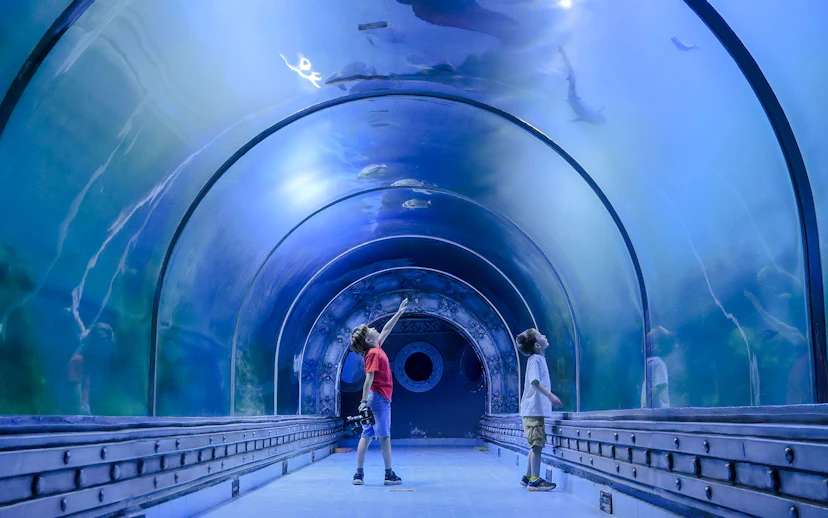
Hurghada Grand Aquarium is a compact but varied indoor attraction best known for its underwater tunnel, Red Sea tanks, rainforest zone, and mini zoo. The visit feels easy rather than exhausting, but it’s more layered than many people expect, with 22 galleries and several non-marine stops that are easy to rush past. The biggest difference between a flat visit and a good one is timing your route around the tunnel and feeding activity. This guide covers when to go, how long to allow, tickets, and the smartest way through.
Quick overview: Hurghada Grand Aquarium at a glance
If you want the short version before you book, start here.
- When to visit: Daily, 9am–11pm, with last entry at 9pm; 9am–11am is noticeably calmer than 1pm–5pm, because that’s when hotel excursions and local family visits overlap in the tunnel and touch areas.
- Getting in: From $33 for standard entry, with premium shark dive access from $125; you can usually buy same-day, but winter weekends, school holidays, and shark dive slots are better booked ahead.
- How long to allow: 1–2 hours works for most visitors, and it stretches closer to 2 hours if you slow down for the rainforest, mini zoo feedings, and the fossil gallery.
- What most people miss: The Wadi Al-Hitan whale fossils and the Bedouin tent exhibit are easy to skip because they come after the headline aquarium galleries.
- Is a guide worth it? A guide helps most if you want feeding schedules, conservation context, and staff-led insight, but a self-guided visit works well if you mainly want the tunnel, tanks, and zoo loop.
Jump to what you need
🕒 Where and when to go
🗓️ How much time do you need?
🎟️ Which ticket is right for you?
🗺️ Getting around
🐠 Which animals to prioritize
♿ Facilities and accessibility
Where and when to go
How do you get to Hurghada Grand Aquarium?
The aquarium sits on Villages Road on the Hurghada–Safaga highway, about 10–15 minutes by car from the resort strip and around 6km (3.7 miles) from Hurghada Airport.
Villages Road, Hurghada–Safaga Highway, km 12, Hurghada, Egypt
- Taxi / rideshare: Hurghada Airport → 8–10 min → easiest if you’re arriving straight from a flight or staying south of town.
- Local bus: Routes #3 and #7 → short walk from the main road → cheapest option, but less convenient with children.
- Taxi from central Hurghada: Sheraton Road or New Marina → 15–20 min → faster and simpler than piecing together buses.
- Private car: On-site parking available → useful if you’re combining the aquarium with Makadi Bay or Sahl Hasheesh.
Which entrance should you use?
There’s one main visitor entrance, but the small mistake people make is assuming all arrivals move at the same pace. If you already have a booking or transfer, you’ll usually get through faster than walk-up visitors buying at the counter.
- Pre-booked tickets / vouchers: For online bookings and transfer guests. Expect shorter waits, especially in the first hour after opening.
- Walk-up purchases: For same-day buyers at the ticket counter. Expect the slowest entry on winter weekends, holidays, and mid-afternoon.
When is Hurghada Grand Aquarium open?
- Monday–Sunday: 9am–11pm
- Last entry: 9pm
When is it busiest? Winter weekends, school holidays, and roughly 1pm–5pm are the busiest windows, when tour groups and local families overlap in the tunnel, touch pool, and mini zoo.
When should you actually go? Go right after opening if you want the clearest tunnel photos and more breathing room, or arrive later in the afternoon if you care more about feeding activity than quiet galleries.
How much time do you need at Hurghada Grand Aquarium?
| Visit type | Route | Duration | Walking distance | What you get |
|---|---|---|---|---|
Highlights only | Direct route to the 24m Underwater Tunnel and main shark tanks | 1 to 1.5 hours | ~0.5 km | See the most famous marine life (sharks and rays) but skip the Mini Zoo garden and minor galleries. |
Balanced visit | Main loop covering the Aquarium, Rainforest Exhibit, and Touch Pools | 2 to 2.5 hours | ~1.2 km | Covers the key masterpiece tanks with time to explore land animals and birds in the rainforest zone. |
Full exploration | All 24 galleries, Fossil Exhibit, Whale Valley, and full Mini Zoo Garden loop | 3 to 4+ hours | ~2 km | A complete experience including the outdoor park and scheduled shark feeding shows; requires stamina in the heat. |
Which Hurghada Grand Aquarium ticket is best for you
| Ticket type | What's included | Best for | Price range |
|---|---|---|---|
Grand Aquarium Entry | Aquarium entry + rainforest zone + mini zoo | A straightforward self-guided visit where you want the full loop without adding transport or a guide. | US$34 |
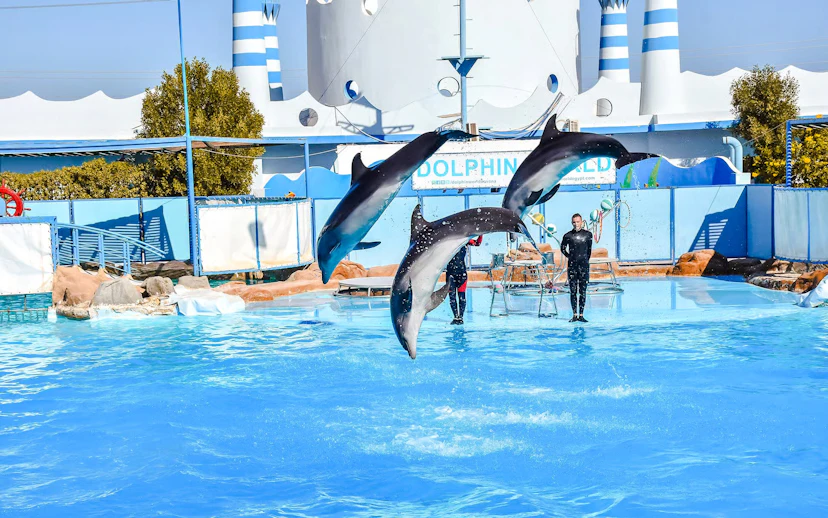
Dolphin World Show & Transfers | 60-min show, skip-the-line entry & hotel transfers upgrade | See dolphins, walruses, and sea cats, with upgrades for hotel transfers | US$24 |
How do you get around Hurghada Grand Aquarium?
The aquarium is laid out as a manageable self-guided loop rather than a maze, so it’s easy to cover in one visit if you follow the route instead of doubling back too early.
Main route and zones
- Main aquarium galleries: Red Sea tanks, sharks, rays, reef species, and the tunnel → budget 35–45 min.
- Rainforest zone: Tropical plants, birds, and habitat contrast from the marine galleries → budget 10–15 min.
- Mini zoo: Rescued animals, aviaries, and feeding activity that younger visitors usually linger at → budget 15–20 min.
- Wadi Al-Hitan fossil exhibit: Ancient whale fossils and regional natural history → budget 5–10 min.
Suggested route: Start with the tunnel and major Red Sea tanks while the glass is still clear of crowds, then move into the rainforest and mini zoo, and leave the fossil gallery for the final stretch when you’re ready for a quieter stop.
Maps and navigation tools
- Map: On-site route signage guides the full loop → it covers the major galleries and zones → pick it up or orient yourself near the entrance lobby.
- Signage: Wayfinding is good enough for most visitors, but the fossil and cultural sections are easy to rush past if you’re only following the crowd.
- Audio guide / app: Multilingual wall panels do most of the work here, so a guide adds most value when you want feeding times or conservation context.
- Large outdoor POIs only: Not applicable.
💡 Pro tip: Don’t assume the visit ends after the tunnel and main tanks. the whale fossils and cultural exhibits come later in the loop, and that’s where many visitors accidentally cut their visit short.
Which animals and habitats should you prioritise?

Underwater tunnel
Habitat: Red Sea tunnel tank
This is the signature space, and it’s the section most visitors remember best because sharks, rays, and large fish move above and around you instead of sitting behind flat glass. It’s worth slowing down here rather than treating it as a quick photo stop. What many people miss is that the best viewing changes as you move through the full tunnel, not just at the entrance crowd point.
Where to find it: Early in the main aquarium route, after the opening galleries.
Cave of fishes
Species focus: Large Red Sea predators and open-water species
This section gives you some of the biggest marine residents in the building, including sharks, turtles, and larger reef fish that feel more impressive here than in the smaller tanks. It adds scale after the earlier gallery displays. What people often rush past is how different the behavior looks from one viewing angle to the next, especially if you wait a minute instead of moving on immediately.
Where to find it: Within the main aquarium galleries, after the early reef exhibits.
Rainforest zone
Habitat: Tropical indoor ecosystem
The rainforest section matters because it resets the pace of the visit and turns the aquarium into more than a marine-only stop. You get exotic birds, lush planting, and a real shift in temperature and atmosphere. Many visitors treat it like a corridor to the zoo, but it’s one of the clearest changes in habitat design inside the building.
Where to find it: Midway through the self-guided route, after the core aquarium galleries.
Interactive touch pool
Experience type: Supervised hands-on marine encounter
This is the most engaging stop for younger visitors and anyone who wants more than passive tank viewing. Under staff supervision, you can gently handle species like starfish and sea cucumbers, which makes the educational side of the visit feel more memorable. The detail many adults miss is that this area is often calmer later in the afternoon than in the middle of the day.
Where to find it: Inside the aquarium section, near the family-focused interactive displays.
Wadi Al-Hitan fossil exhibit
Era: Ancient whale evolution and paleontology
This small gallery is one of the aquarium’s most distinctive sections because it links marine life to Egypt’s deep natural history rather than repeating more fish tanks. The fossils make a strong contrast to the live exhibits and give the visit a quieter finish. Most visitors miss it because it comes after the headline marine sections, when they assume they’re nearly done.
Where to find it: Toward the later part of the loop, after the zoo and habitat sections.
Mini zoo and feeding area
Experience type: Rescued animals and family interaction
The mini zoo adds a very different rhythm to the visit, especially if you’re traveling with children who need a break from glass-fronted displays. Otters, birds, tortoises, and small animal encounters make it more interactive than the aquarium galleries alone. What people often miss is that the best version of this section depends on timing it around feeding activity rather than just walking through once.
Where to find it: After the rainforest zone, in the later half of the route.
Facilities and accessibility
- 🎒 Lockers / bag policy: Travel light, because the easier this visit feels often depends on carrying a small bag rather than managing bulky items through the loop.
- 🚻 Restrooms: Restrooms are available on-site, and it’s smartest to use them near the entrance or café rather than waiting until the busiest family period.
- 🍽️ Café: There’s an on-site café for cold drinks and simple snacks, but it works better as a convenience stop than a reason to eat here.
- 🛍️ Gift shop / merchandise: The exit shop covers the usual aquarium souvenirs, toys, and small keepsakes for children.
- 🪑 Seating / rest areas: Rest stops are available during the visit, which helps if you’re visiting with children or older relatives.
- 🅿️ Parking: On-site parking is available, which makes this one of the simpler indoor attractions to reach if you have a rental car.
- 🩺 First aid / medical support: Staff are on hand during supervised animal interactions and can help if you need assistance during the visit.
- ♿ Mobility: The main floors are reached by ramps and elevators, and the attraction is generally stroller- and wheelchair-accessible, though some outdoor paths feel rougher than the indoor galleries.
- 👁️ Visual impairments: This is a highly visual attraction, so visitors who want fuller context may need to rely on a companion or staff support beyond the wall panels.
- 🧠 Cognitive and sensory needs: The quietest window is right after opening, while the tunnel, touch areas, and feeding spaces can feel louder and more stimulating in the mid-afternoon.
- 👨👩👧 Families and strollers: The main route works well with strollers, and the short overall visit length makes it easier than most full-day Hurghada attractions with young children.
This is a strong fit for children because the visit is short, visual, and varied, with enough animal interaction to hold attention without turning into an all-day march.
- 🕐 Time: Around 1.5–2 hours is realistic with children, especially if you pause for the tunnel, touch pool, and mini zoo instead of trying to read every sign.
- 🏠 Facilities: The café, restrooms, seating areas, and stroller-friendly route make this easier with young children than many outdoor attractions in Hurghada.
- 💡 Engagement: Start with the tunnel while energy is high, then use the touch pool and mini zoo as your reward sections later in the route.
- 🎒 Logistics: Bring a small bag, water for before or after the visit, and a phone with storage cleared, because the tunnel is where most family photos happen.
- 📍 After your visit: The resort-strip area along Villages Road is the easiest next stop if your children still have energy and you want food or beach time afterward.
Know before you go
What you need to know before you go
- Entry requirement: Standard entry is open-entry rather than timed, with adult tickets for ages 10 and up, child tickets for ages 4–9, and free entry for children under the age of 4 years.
- Bag policy: A small day bag is easiest here, because the route is compact and bulky bags make the touch areas and zoo section more awkward.
- Re-entry policy: Plan to treat this as one continuous visit, because stepping out mid-visit can disrupt the short, self-guided loop more than you’d expect.
Not allowed
- 🚫 Food and drink: Outside food is best left for before or after your visit unless you’re handling essentials for young children.
- 🚬 Smoking and vaping: Smoking and vaping should be treated as outdoor-only behavior, not something to assume is allowed inside the attraction.
- 🐾 Pets: Pets are not part of the visit experience, while service animal access should be checked directly before arrival.
- 🖐️ Touching animals or exhibits: Only touch animals in supervised interaction areas, because the rest of the aquarium and zoo are designed for viewing rather than handling.
Photography
Photography is allowed through most of the attraction, and the tunnel is one of the best photo stops in the building. Keep flash off around tanks and animal enclosures, both for better glass reflections and for the animals themselves. Tripods and bulky photo setups are a poor fit for the narrow visitor flow, especially in the tunnel and family zones.
Good to know
- Feeding sessions: If animal feedings matter to you, ask staff early in your visit instead of hoping to stumble across them later.
- Visit flow: The final galleries are quieter and less crowded, so don’t assume the experience is over once you’ve seen the tunnel.
Practical tips
- Booking and arrival: Standard entry is usually fine to buy close to your visit, but book at least a few days ahead if you want hotel transfers or the shark dive, because those are the first options that become less flexible.
- Pacing: Don’t spend your entire photo budget in the first 10 minutes — the tunnel deserves time, but the rainforest, mini zoo, and fossil gallery are what make this feel like a rounded visit rather than a single-room stop.
- Crowd management: The best sweet spot is 9am–11am, when the tunnel is clearer and the galleries feel more spacious than the 1pm–5pm family-and-excursion window.
- What to bring or leave behind: Bring a small bag and leave bulky beach gear in the hotel, because this visit is short, indoors, and much easier when you’re not carrying half a resort day with you.
- Food and drink: Eat a proper meal before or after your visit if value matters to you, and use the on-site café for a drink or quick break rather than your main lunch plan.
- With children: Save the touch pool and mini zoo for later if you need leverage, because once younger visitors get to the interactive sections, it’s harder to pull them back into slower tank galleries.
- Shark dive planning: If you’re booking the shark dive, bring your certification details and build the rest of the visit around its fixed session time instead of treating it as an add-on you can decide on at the door.
What else is worth visiting nearby?
Commonly paired: Hurghada Cable Car
- Distance: About 6km (3.7 miles) — around 10 min by taxi
- Why people combine them: It’s an easy short add-on after the aquarium because both work well as lower-effort sightseeing stops, and the cable car gives you outdoor views after an indoor visit.
Commonly paired: Jungle Aqua Park
- Distance: About 8–10km (5–6.2 miles) — around 20–30 min by taxi
- Why people combine them: Families often split the day between a shorter indoor attraction and a longer afternoon waterpark, especially when they want variety without committing the whole day to one place.
Also nearby
Hurghada Dolphin House boat trip
- Distance: Marina departure points are farther away; allow extra transfer time from the aquarium
- Worth knowing: This pairs best on a separate day if you want a real open-water marine experience rather than stacking too much travel into one itinerary.
Desert safari and Bedouin village
- Distance: Usually 45 min or more by transfer, depending on your camp and hotel area
- Worth knowing: It complements the aquarium’s Bedouin-themed touches well, but it’s a stronger same-evening plan than a rushed same-afternoon add-on.
Eat, shop and stay near Hurghada Grand Aquarium
- On-site: The aquarium café covers cold drinks and simple snacks, but most visitors use it as a convenience break rather than a destination meal.
- Better options nearby: Not applicable.
- 💡 Pro tip: If you care about value or food quality, eat before you arrive or wait until you’re back on the resort strip, because the visit is short enough that you don’t need to build lunch into it.
- Gift shop: The on-site gift shop near the exit is the main shopping stop, and it’s best for simple souvenirs, children’s toys, and aquarium-themed keepsakes.
The aquarium is easy to reach from the resort corridor, but it’s not strong enough on its own to justify choosing this exact area as your entire Hurghada base. It works best if you’re already staying along Villages Road, El Mamsha, or near the airport and want a quick indoor attraction without much travel. For longer stays, you’ll usually want a neighborhood with better beach access, dining, and evening atmosphere.
- Price point: This area tends to skew resort-based rather than budget-local, with the best value depending more on your hotel package than the immediate surroundings.
- Best for: Short stays, airport-adjacent nights, and families who want one easy indoor activity without a long transfer.
- Consider instead: Sheraton Road, New Marina, or the main resort strip are usually better for longer stays because they give you easier dining, more walkability, and stronger evening options.
Frequently asked questions about visiting Hurghada Grand Aquarium
Most visits take 1–2 hours. Around 1 hour is enough if you focus on the tunnel, main tanks, and a quick pass through the zoo, but families, photographers, and anyone waiting for feeding activity usually stay closer to 2 hours.
No, you usually don’t need to book far in advance for standard entry. Same-day visits are common because admission is open-entry, but it’s smarter to book ahead in winter, on holidays, or if you want hotel transfers or the shark dive.
You don’t need to plan around a strict timed entry, because standard admission is open-entry. If you want the calmest visit, aim to arrive close to 9am, when the tunnel is clearer and the galleries feel less compressed than later in the day.
Yes, a small bag or backpack is fine for most visitors. This is a short indoor visit, though, so a bulky beach bag usually makes the touch areas, zoo section, and family stops feel more awkward than they need to.
Yes, photography is generally allowed. The key practical rule is to keep flash off around tanks and animal areas, both to cut reflections in the glass and to avoid disturbing animals during a visit that is built around close viewing.
Yes, groups can visit, and the attraction works well for families, school groups, and small tour parties. If you’re coming as a larger group, it’s worth asking about hosted visits or group handling in advance so you don’t all bottleneck at the entrance or tunnel.
Yes, it’s one of the easier family attractions in Hurghada. The route is short, mostly indoors, and varied enough to hold attention, with the tunnel, touch pool, mini zoo, and feeding activity doing most of the heavy lifting for younger children.
Yes, the main visit is generally wheelchair-accessible. Ramps and elevators help with the primary route, though some outdoor sections can feel rougher than the indoor aquarium galleries, so the smoothest part of the visit is the core marine section.
Yes, there’s a café on-site for drinks and basic snacks. It’s useful for a quick break, but because the visit is usually only 1–2 hours long, many travelers prefer to eat before or after the aquarium instead.
Yes, feeding activity is part of the regular visit when it’s running that day. The exact timing can shift, so ask staff early after you enter if seeing an animal feeding is one of the main reasons you came.
Yes, but only as a separate premium experience for certified divers. The shark dive runs as a fixed-session add-on, lasts about 35 minutes, and is a very different visit from standard admission, so it’s best planned in advance.